When questions swirled, an answer had to be sought
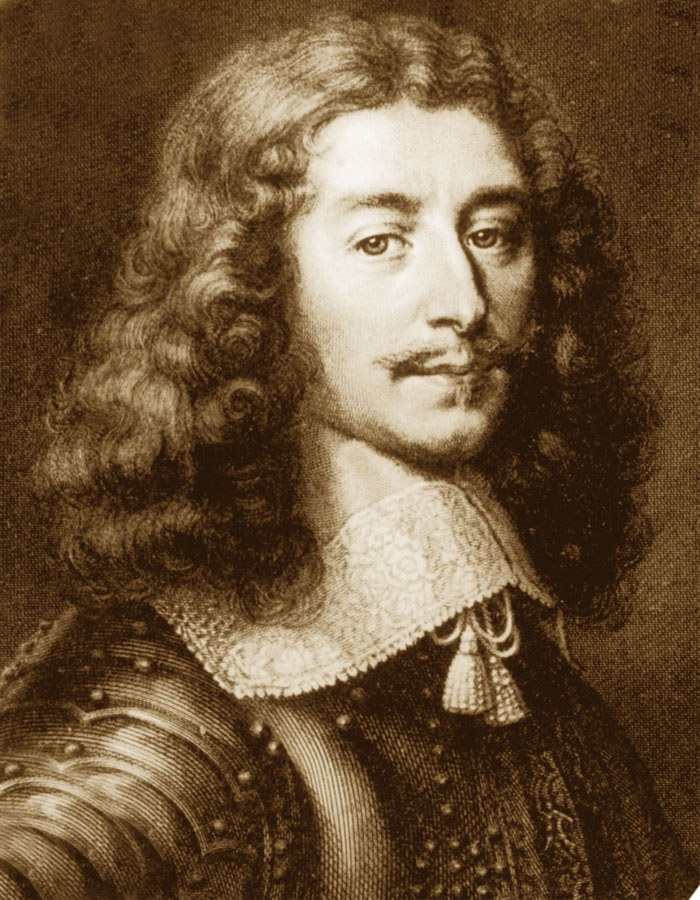
General awareness of this eclectic writer of maxims mostly comes from Nietzsche’s Beyond Good and Evil, wherein the Maximes‘ insight into moral ambiguities and self-interests, aided by the stylistic brevity, provokes a critical redressal of ethics. Jonathan Swift wrote glowing praise that as the maxims drew from Nature, there was no corruption in them. Panagiotis Kondylis too, in his introduction to Lichtenberg’s Sudelbücher, notes the direct influence of La Rochefoucauld on the German satirist’s sardonic style. Here he enunciates that the specific form of literary expression which encompasses maxims and aphorisms with their parallelisms and repetitions are distinguishably typical of the New Times(Neuezeit) and were a vehicle for criticisms of fashionable mores and that they furthermore constituted a radical revision in the approach to anthropology, namely harkening a more secular view of human relations. All the more, their fragmentary nature conveyed the idea that general observation could only describe a fragmentary phenomenon and was a conscious rejection of a vast undertaking on full knowledge of Being. The Duc also figures as an illustrative example of somebody who understands the ethico-political legitimation of power, and at face value, Maxims VII and XV are the finest examples of this understanding. However on the intention of the work, I part ways with Kondylis, as I find Maxim 436 strongly suggests a concern about a definitive set of ethics even as it reiterates the Antisthenes Paradox from Plato’s Sophist in a curt form. And this is despite an acknowledgment that the work effectively postulates psychology rather than metaphysics as first philosophy.
As I read the Maxims, I could not help but note it’s humourous overtones and the boisterousness of some assertions. It led to me investigate his contemporaries and predeccesors and also French analysis of the Maximes, which is, naturally more advanced than the English commentaries/translations. The former are quite unanimous(Jean Lafond, Philippe Sellier, Laurence Plazenet) in their understanding of this great compilation as fundamentally being replete with Neo-Augustinian themes. Lafond while acknowledging the near-Hobbesian anthropology also noted quite convincingly that the natural elements in the Maximes are not external to a form of Augustinianism. The famous solitaire of Port-Royal, Robert Arnauld d’Andilly wrote that La Rochefoucauld ought to be read with the Abbè Saint-Cyran’s Instructions Chrétiennes. Further, it has now been strongly established that it was a work borne from partnership with Marquise de Sablé, whose salon the Duc frequented. The Marquise would retire and pass away at the Abbey at Port-Royal if her sympathies were not displayed in acts of support in her life. After the presentation of the draft to the Journal des Savants, the Mme insisted that the Duc treat it as his own, with the liberty to amend it as he pleased. There was already a strand of ethical literature which was beginning to detach virtus simpliciter and virtus secundum quid. Machiavelli’s paradiastolic substitution-equivocation of virtue and vice undergirding his grounded concept of virtú for the sake of the Cive was notable in it’s idiosyncrasy. Montaigne lent perspectivity and relativity to his observations but retained a Peripatetic view of virtue as a habitual state, even going so far as to discount the influence of accoutumance(custom) from true virtual state. One can appreciate the nuance between habit and routine being established for consistency, such that free choice must be upheld in virtuous action. But Montaigne’s specific disjunction between moral subjectivity and physical disposition in providing a descriptive account of human behaviour suggests that preservation of human society involves some of it’s constituents acting immorally. La Rochefoucauld possesses a similar disposition on ambiguity at face value if we read Maxims 182-192, but I do not think the Duc is making a political point where public interest merits vices as phronetic practice, unlike the adroit Montaigne.
If we account for the earlist circulating transcription of these maxims in a compiled form, the Liancourt Manuscript, it is evident that the language is explicitly Augustinian. It also contains direct reference to Divinity which subsequent editions tended to expiate, perhaps to emphasise for stylistic effect. The traditional attribution for the presentation in a cynical tone was the Duc’s previous life as a Frondeur. This aristocratic, at times bourgeois rebellion against the palpable yet nebulous power of the Crown failed to dislodge Cardinal Mazarin and indeed his predeccesor Richelieu’s legacy. After the Fronde, for much of the time between 1653 and his death in 1680, La Rochefoucauld lived at the Hôtel de Liancourt, the Paris seat of his uncle the marquis de Liancourt, which the La Rochefoucaulds would inherit. The Hôtel de Liancourt was a focal place of discussion among sympathisers of Port-Royal. at the same time as he is reduced to the plaything of physical forces, in which the key cultural precondition of the Maximes is a preoccupation with unmasking false virtue and flattery fostered and practiced as mode de vie in the Absolutist court(this is most evident in the paired maxims 15 & 16). The man’s will also expressed deep religious faith. Perhaps considering how most of Rochefoucauld’s(undesired or not) fame has come through Nietzsche, it ought to suprise most that the specific targets of the Maxims(at times) is the supposed Great Man exalted by antiquity and those who exalted them in his time for their virtues.In Maxim 504, the constancy in the face of death is subtly deemed to be nothing but the vitiation of amour-propre(self-love) that implicitly suggests selfishness for want of posthumous reputation. But yet Maxim 308 also suggests that moderation is included in virtue to console the ordinary for their lack of achievement. Maxim 316 also disparages the ‘weak’ as they would lack sincerity. The origins of Ressentiment? I hold that the paradoxes are held together by a strong theological premise.
For more background, Suarez argued that it is not neccesary for any acting agent to import an evil circumstance in any given action, that an unbelieving agent did not act qua unbeliever with use of natural reason, so nature in this view not opposed to grace, and temporal rewards come from the source of grace, nature rather is a regulative category. Aristotle too had distinguished one who was valiant to one who was courageous, or machimoi against andreoi, in that the latter truly was noble(dia to kalon) but also possessed pathos. The great mystic of that age, St Francis de Sales, considered the capacity of natural ends and also the utility of supplementary ends. It is the choice which determines real and apparent virtue. Mundane activity could be subordinated into the Christian life in pursuit of beatitudes, as opposed to the Neo-Augustinian insistence on personal experience. Pierre Gassendi, an early atomist on theories of matter, agreed that moral goodness had to be physically defined, but also acknowledged an immaterial animus when it came to goods such as friendship or desire for ataraxia or for God. The libertin érudit and sceptic La Mothe Le Vayer, a partisan of Cardinal Richelieu, in his De La Virtu des Payens sought to defend both the oft-discussed classical virtues and interestingly those of Confucius also. He does this by attacking the Jansenist rigorist view by citing Bellarmine’s argument that Augustine did acknowledge the virtues of the Romans by giving them their Empire as per De Civitate Dei V.15-16, asserting strongly that it is possible to pursue intrinsic goods through honnêteté in view of God. This attracted the criticism of many opponents of centralisation who saw in Richelieu’s raison d’etat much of the earthly civic patriotism expounded by the Ancients. Molina, that great enemy of Blaise Pascal, followed the Scholastic viewpoint that deeds could be performed which were unconducive to the supernatural end but were good simpliciter but did not marshal polemical artillery against those who believed in the Augustinian view out of respect for St.Gregory of Rimini’s authority, whereas Pascal had acerbically compared his battle to that of Augustine’s with the Pelagians and argued that Molinist universal efficacious grace was the polar extreme of Calvinism, insinuating heresy.
But as I have strongly indicated, there did exist a strong strand of pessimistic thought on the instrinsic naturality of virtues. Jansenius, who is paramount to understand for context took from Augustine more than just guidance on dogma. The Churchman had insisted that ‘virtues’ subordinated to worldly gain were not genuine. In turn the Dutchman intimated that the ordering of the will to love(ordo amoris) cannot be sufficiently acted on by the intellect so that even the philosophers who practiced virtue were impelled by a love of self, raising the concern of falsity of virtue or defective virtues. Descartes disaparaged the moral philosophy of the ancients as akin to palaces of mud and sand. Antoine Arnauld compared Seneca to a Christian with implicit(lacking) faith, deeming it impossible for pagan values be encompassed within those of Christianity as all examinations of conscience would have been to the individual themselves, not to God, and thus it was prideful. Arnauld also specifically popularised the term amour-propre as a translation of Augustine’s superbia but lent it a psychological element as that which distracts from virtue. Aristocratic honnêteté was therefore a cheap imitation of charity in pursuit of appearing virtuous. The specific polemical vector here was that markers of sagacity such as apatheia as dispositions could themselves be products of vice. Here, I do not sense that La Rochefoucauld disposed of honnêteté, perhaps this is what does not make his work Jansenist en bloc, but simply Augustinian or simply Christian. One senses a tension in Maxim 316 which cries for nuance, that a genuine act of goodness is possible for the ‘strong’, but that it can only be known for it’s integrity from the perspective of God’s Eye. Honnêteté was the yardstick according to which the Duc alloyed Christian ‘true virtue’ and aristocratic ‘authentic selfness’ in the manner of speaking Frankly. We may parse out this context when realise that Pascal also spoke of vertu decevante, not as modern French speakers would know it to mean ‘disappointing’, but rather by it’s antique meaning of deceptive[we get deceive in English from this], which posits that there are real, undoubtedly Christian virtues. And in the Pensées the Philosophes he admonishes are the Stoics. It is in this sense that Maxim 74, which speaks of a thousand copies of true love becomes intelligible.
But what if these objections give rise to qualified exceptions(as in Maxim 105) where dignity may be recognisable? The extensive use of scalar expressions such as ‘nous sommes’ or ‘plus souvent’ or ‘mepriser’ give an insight into the perspective on the acquisition of knowledge of oneself. The paired maxims 344/345 speak of special cases of insight brought to the fore by cognitive response to extraneous circumstances. On top of the gallant ethos is the neccesity of sincerity in the relation of mutual obligation with another honnête homme, this self-improvement providing a unflattering assessment in the face of inflated ego. And the resulting self-trust is how the inverse of the ‘weak’, the ‘strong’, can become sincere(Maxim 316) and I strongly relate this to the ability spoken of in Maxim 165 to earn the esteem of the other men of honour, which, is plainly obvious, sincerity.
Some would see the Maxims serving as a guidebook to propound the ethic of honnêteté which encompasses non-moral social taste with the accompanying dour fact that genuine moral reasons do not exist, others would focus on how it demonstrate passions or amour-propre obfuscate and yet bring to light the illusions of human systems of morality. I see it as a challenge to eschew pride and embrace radical self-honesty as a lived disposition which is itself a call to Christian life. And I believe Maxim 358 caps this well. I am not the first to have tread this path, in fact, I think Book I[European Nihilism] of the compiled manuscript Will to Power references this radical honesty which could have only been gleaned from Pascal and yes, the Maximes of La Rochefoucauld. Dare one call it a supreme work of apologetics?

 The Mystagogue's Blog
Leave a comment