Foreign policy, the Cold War and the Global Colour Line
The intellectual matrix that legitimises power enabled a grand narrative of anti-totalitarianism to form that provided American policy undertaking retroactive justification and coherence to maintain benevolent hegemony. A unique/miscellaneous constellation of American progressivism with inspiration from sources as varied as Unitarian theology, psychoanalysis, Boasian anthropology, a specific form of Catholic Personalism which broke from previous tradition with novel views on human dignity and support for mass democracy and pluralism and revisionist Marxisms from various sources which emphasised new models within the definition of oppression, all neatly packaged with constituent groups of oppressed needing liberation. A réseau of relations, positive ethicism, built on accomodating desiderata evened by the social obligation of reasonableness. The policies undertaken and implemented within the agon of the Cold War duopoly, to counter foreign affairs challenges, neccesitated domestic change, but which with the altogether sudden collapse of the Other, metastasised without rationale into Woke. A negrologism by origin, it has come to encapsulate in general parlance as what in an amorphous sense has gone wrong. Other terms for the current state of affairs have been suggested; GNC, ZOG, Cultural Marxism, GAE. Intersectionality, another good one, a summative concept which is totalising all the same. Gay race (Anti)Communism to counter the grand narratives which implicate Soviet Marxist-Leninism? But a scribe is a slave to convention, so woke it is. The secondary and tertiary effects of the Cold War battleground still reverberate. One may question by the end about why such action which precipitated the change was neccessary? Just as the West saw Washingtons in new leaders in the Third World, the leaders and their peoples in the decolonisation process found the confession of human rights useful for polemical instrumentalisation.
The Paris Peace Conference(1946) which discussed cessions and reparations owed by minor Axis members like Italy and Hungary demanded that the latter “shall take all measures neccesary to secure without distinction as to race, sex, language or religion, the enjoyment of human rights and fundamental freedoms”. Secretary of State James F Byrnes hoped in relation the contentious borders between Hungary and Czechoslovakia that (they) may find by common agreement similar solutions to their nationality problems on the basis of working together as friends…we in America know that people of different races and stocks can live together in peace in the United States”. Byrnes was a Dixiecrat who voted against anti-lynching bills1. The meeting of the Federal Council of Churches in 1943 bears out more interesting details. The meeting was chaired by Chairman John Foster Dulles, yes the one, who also represented his study group, the Commission to Study the Bases of a Just and Durable Peace. It was also attended by the heads of America’s prestigious college seminary heads. Summarised points in the program include; A world government of delegated powers, progressive elimination of all tarriff and quota systems on world trade, strong immediate limitations on national sovereignty, worldwide freedom of immigration and autonomy for all subject and colonial peoples, complete abandonment of American isolationism2. The last point is worth highlighting as the responsibility was not laid on Germany and Japan for their mischief alone, but the self-criticism emphasised a mandate that America had mantled wherein it could reorder the world along idealistic conceptions of world-unity as a resolution to the problem of planetary politics.
The triumph of John Fitzgerald Kennedy in 1960 was expected to signal a pro-Third World shift in American policy against it’s NATO partners, to the excitement of many. Then Senator Kennedy had given a speech before Senate on July 2 1957 reproaching the Eisenhower administration’s stance towards the Algerian independence struggle, deeming it a “heads in the sand” stance, entitled “Imperialism: the Enemy of Freedom”. The threat which cast a shadow over the world? Soviet Imperialism3. This was the impetus, as consensus was building that it was imperative to present the system of the International Community in terms of racial equality. But for context, we have the explicit backing of President Truman for the NAACP at their annual convention in 1947 where he was the keynote speaker, a relationship that would bear fruit with Exec. Order 99814 which removed segregation from the Armed Forces. Indeed, Truman, a man who came from a ‘violently unreconstructed Southern family’ chose to create the President’s Committee on Civil Rights in 19465. This decision itself requires context, and this merits discussion of an important inflection point in American politics. When the Southern Democrats lost out to a joint alliance between the NAACP and the CIO, the new “Liberal-Labour” inter-party alignment. From 1948 onwards, labour and civil rights would slowly become the dominant twin platforms of the Democratic Party. At the same time, the Republican party also saw intra-party strife to the detriment of the Old Right during the debates on the Bricker Amendment, which failed to pass. Phyllis Schalfly, president of the Illinois Federation of Republican Women and conservative commentator wrote a book called A Choice, Not an Echo, the wide distribution of which in California was a major catalyst for the victory of Goldwater over Rockefeller in the Republican primaries, insinuated that forces beyond the party had played a role in the presidential nominations from ’36-’60, in particular scuttling the 1952 nomination of Robert Taft6. Tom Wicker, of the New York Times would write nonchalantly, “the bitterest resistance to Senator Goldwater centers in the eastern, internationalist power structure that for two decades has dictated Republican nominations.” Unique to America, trade-unionists welded themselves to the DNC as a caucus. The two bedfellows particularly found common cause in opposing the Taft-Hartley Labour Management Act 1947. At the CIO’s annual convention in 1947, an NAACP memo read that “there is no difference between the assaults upon the rights of labor and the various forms of discrimination which oppress minorities.”7 So the bond was sealed. AFL-CIO president George Meany would personally thank the NAACP for their backing in opposing “right-to-work” laws in 19588. Nixon and Goldwater also held moderate pro-civil rights stances, the latter had voted for the CRA’s of ’57 and ’60 and had a long personal history of mandating integration in Arizona, but the true turn in policy would come with this new imbrication, not originally desired by Truman, who wished to keep compromising to keep the Solid South voting Democrat and was alarmed at their delegates threat to not show up to the Jefferson-Jackson Day dinner in 1948, which materialised into the makeshift and not wholly effective States’ Rights Democratic Party opposing the Democrats led by Strom Thurmond in 1948.
Nevertheless, the 1948 platform broke with the party’s history of States’ Rights and the lessons from ’52 when they ran the liberal Adlai Stevenson only reinforced for the party that there was no place for “Bourbons” at the front of the party anymore, even with the concession selection of John Sparkman as Stevenson’s VP. Three competitive candidates—Kefauver, Kennedy, and Johnson— changed their previous views on civil rights in 1956 and 1960 because they recognized how important the “Black-Blue” alliance was at conventions. It was in fact this party and association elite, including Victor Reuther, Bethuel M.Webster and Eleanor Roosevelt who would meet at the Conneticut home of NAACP Exec. Sec Walter White to delegate a fact-finding mission to John A.Davis, a former DuBois acolyte, Black moderate and Columbia-educated sociologist. Based on this meeting and mission, the American Information Committee on Race lobbied the federal government to increase the representation of Blacks in the Foreign Service. To go back to the Kennedy administration, there was also the work of the SPSS(the Special Protocol Service Section), a temporary office within the State Department’s Office of Protocol. On July 10 1963, Sec of State Dean Rusk testified in front of the Senate Commerce Committee that the Public Accomodations Bill 1963’s(which prefigured the Civil Rights Act the following year) passage was the key to victory over the Soviet Union. Backed by Robert Kennedy, who as attorney-general set up the civil rights bureaucracy, figures like Cuban-born political organiser Pedro Sanjuan worked to enact new legislation that would sway the “neutralist bloc of nations” which Rusk spoke of to the side of the United States. Sanjuan’s advancement seemed contingent on the favour of RFK, who found his community organising in Spanish Harlem for his brother’s presidential candidacy impressive. Of immediate concern was the mistreatment of Ghanian, Nigerian and Sierra Leonese diplomats by Marylanders in the segregated state, as Route 40 connected DC to New York, often the first port of call for diplomats. A particular incident was the refusal to serve William Fitzjohn, the charge d’affaires from newly independent Sierra Leone by a restaurant in Hagerstown, Maryland. This encouraged Sanjuan’s efforts to first end blockbusting and residential segregation in DC to accomodate African diplomats in the capital’s northwest which culminated in the President issuing Executive Order 11063 in 1962. Then there was the effort to specifically desegregate Route 40. Sanjuan knew how to play his cards, in his first speech to the Maryland General Assembly in 1961, he asked the legislators to raise their hands if they wanted to help Communists win the Cold War. He continued that the humiliation of a foreign dignitary could produce results just as damaging as passing secrets to the enemy. By March 1963, the State’s General Assembly passed a law that barred discrimination in hotels, albeit only in counties around Route 409. In summary, the Kennedy administration started on a strong note in support of African national liberation endeavours but by the end of the term cut short had moved towards a neutralist line by phasing out Africanists whereas the administration had started giving due respect to the Democrat base in the South but after exasperated dealings with George Wallace and Ross Barnett, had come to make a strong public for Civil Rights at home. Rather fitting that the international airport named for the President prioritises awarding contracts to minority and women-owned businesses(MWBE) as per the New York State’s Port Authority 30% mandate for it’s revamped facilities.
There is nothing I will write which will top the detail provided by Jesse Merriam on the “canonisation” of Brown v Board as a seminal decision. Consider this a summary10. Even better is L.Brent Bozell II’s(Buckley’s B-I-L) The Warren Revolution, cited in his article, analysing the Warren Court. On how particularly institutionalisation by established precedent of this canonical case can broadly be termed as a Revolution which changed American life fundamentally. The decision was the culmination of the NAACP’s legal strategy drafted by Felix Frankfurter and Nathan Margold which followed their coup of the Democratic Party with Labour unions, backed by the Garland and Ford Funds. The Garland Fund was founded by a Wall Street heir, Charles Garland whose correspondence with socialist writer Upton Sinclair(of Intercollegiate Socialist Society fame, acquaintances included Jack London and Walter Lippmann) led him to use his inheritance for philantrophy. The major beneficiaries of the Fund besides the NAACP included the American Civil Liberties Union(ACLU) and the communist newspaper, the Daily Worker. The NAACP then focused it’s litigation program on higher education and then public education in toto, laying the groundwork for the regulation of private discrimination. The American Jewish Committee hired a psychologist, Kenneth Clarke, to prepare a report about segregated schooling’s impact on the self-esteem of black schoolchildren, which the NAACP presented as part of it’s brief for the decision and which Earl Warren cited in the decision. Brown v Board of Ed became a Cold War weapon as evidenced by the opinions of Attorney Gen. of the DOJ, James McGranery and Sec.of State Dean Acheson’s opinions from the friend of the court brief11. It’s fruits were evident as early as 1968 in Porcelli vs Titus 1968 where a Newark School board discarded it’s formal procedures for promotions for race-based criteria, and this was in fact upheld as being perfectly in line with Title VII of the Civil Rights Act by the District Board. Three opinions of the Fifth Circuit, written by activist judge John Minor Wisdom asserted that Brown required positive governmental action to encourage integration. Green vs County School Board 1968 followed the wisdom of Wisdom to interpret that Brown’s enforcement required school boards to eliminate racial discrimination “root and branch”. If this wasn’t evident by the creation and actions of the Community Relations Service created in 1964[think Stateside equivalent of Home Office controlled spontaneity]. It’s centrality to American legal culture is highlighted in the concessions of opinion by William Rehnquist in his path to admission and the refusal of the Senate to admit Robert Bork(author of Slouching Towards Gomorrah) as Associate Justice to the Supreme Court on the grounds of his non-allegiance to the sacred civil rights rulings12. By 1985, the New Jersey Supreme Court issue Abbot vs Burke deemed public school funding on local property taxes inequitable(though Robinson vs Cahill ’73 had already raised this “issue”), leading to the formation of “Abbot districts” which received judicially-mandated benefits from extra-district taxpayers, but have yet to show any improvement in the achievement gap.
One of the most fascinating criticisms of Brown v Board came from Hannah Arendt, the Jewish emigre philosopher, who warned of the damage this would do to the federal level jurisdictions and set worrying precedent. Arendt, curiously, was also had positive words for colonialism and an explanation for the action of the Boers in South Africa. Suffice it to say, it remains one of those guility admissions which academic types who like her work have to make before introducing her, much as they do with her former lover Heidegger’s ouevre. Her “Reflections on Little Rock” criticised the decision as being a possible catalyst for totalitarian government under the guise of extinguishing private discrimination. In effect the decision did away with State Action doctrine, meant to preserve a distinct private sphere of autonomy and instead birthed a new system of oversight of private conduct. It follows that freedom of association as a legal concept has been wiped away clean. Equally, federalism/states rights as demarcated by the 1787 Constitutional Congress at the earliest in any meaningful sense was also discarded. The Brown decision saw the expansion of the power of judicial review through incorporation doctrine, local governments and in principle the Tenth Amendment were nullified therafter by the judicial activist interpretation of the Fourteenth Amendment as a resolution to obstacle preemption. Chief Justice Warren did in fact deliberately withhold the decision for Bell vs Maryland on the matter of discrimination in public accommodations in order to pre-emptively step in with a judicial decision with the same effect had Congress not passed the Civil Rights Act around the same time. Such was the zeal.
The Money Trail:
If a ‘playbook’ of any sort was followed, then it would have to be the “Report of the Study for the Ford Foundation on Policy and Program” penned by then President of the Foundation Rowan Gaither which identified the use of the Foundation’s coffers for five Program Areas13, which invoked amorphous platitudes such as ‘strengthening of democracy’ or ‘democratic self-realisation’. The sociological language is already evident. The report of course validates the conceit that the democratic institutions, ‘which are but means for men’s requirements’ as bulwarks at ‘democracy’s ideological frontier’. It heralded the transformation of the institution of the State into a new Civil Rights-NGO complex, where indirect powers reigned supreme. By the mid-1950s, Ford had become the world’s first billion-dollar foundation. Gaither, quite handily for the purpose of this writeup, identifies the need to utilise sociology towards questions of minority race relations. Gaither was also responsible for setting up the anti-McCarthy Fund for the Republic. Gunnar Myrdal’s American Dilemma(1942)had already laid the groundwork for the sociological justification for the expansion of civil rights, then a response to Imperial Japan’s propaganda, a project funded by the Carnegie Corporation, which allowed Myrdal access to sociological and legal data14. The Ford Foundation itself had origins which would not stand up to the principle of scientific philantrophy which Andrew Carnegie had outlined, it was Henry Ford’s way of sheltering his company stocks from taxes. But where the 1950’s saw a ‘research-oriented approach’ to philantrophy, by the turn of the next decade, there was a call for an ‘action-oriented’ one instead. The results of this shift? The Gray Areas and Mobilization for Youth(MFY) Projects headed by Harvard social theorist Paul Ylvisaker, who started up “community action agencies” for urban Black and Puerto Rican populations in the urban centres of the Northeast15. The MFY under it’s director, Ezra Birnbaum officially reoriented itself from advocacy to revolution in 1963 after a delinquency aid grant by the Presidential office in June 1962, besides the money coming from the Foundation coffers. Birnbaum explicitly stated that the MFY would be the blueprint for “institutional change”. This was not all too different from Gov.Rockefeller’s Urban Development Corporation in New York which worked to terraform neighbourhoods through integration with the support of Harlem Black Power groups coalesced into the Harlem Commonwealth Council(HCC)16. Gray Areas was particularly meant to serve as a testing ground for federal welfare projects and the Foundation activists declared victory with the passage of the Economic Opportunity Act 1964, which informally began Johnson’s War on Poverty. The successor community action projects became hotbeds for Black Power and Puerto Rican nationalist militancy. Notably, the Newark office released a statement calling for Blacks to arm themselves in anticipation of riots in 1967. Odd characters with Black nationalist leanings associated with the Foundation’s projects included Rhody McCoy and Les Campbell in the Brooklyn Decentralisation school project. When McGeorge Bundy, former National Security Advisor to Kennedy and Johnson became president of the Ford Foundation, “minority rights education” rose to 40% of the Foundation’s investments by 1970.
Under Bundy’s leadership, Ford created a host of new advocacy groups, such as the Mexican-American Legal Defense and Educational Fund. It is key to note that Immanuel Wallerstein, sociologist-economist and a major intellectual influence on the New Left, travelled and interacted widely with Africa as a member of the World Assembly of Youth(WAY) and the African Studies Association(ASA), both, and therefore his travel and research funded by the Foundation17. Foundation-thinking led to the terraforming of American urban centres and then on the larger scale, the geopolitical landscape. Ford had already directly begun funding the NAACP with minor grants in 1952, but it was Bundy who established solid ties with both this mainstay organisation and the National Urban League. Bundy’s assistant in National Security in the Kennedy administration was none other than Marcus Raskin18, the “dean of the American Left” and founder of the Institute of Policy Studies, which is the central node of the New Left that linked radical academics and the Liberal establisment. Under his tutelage was a member of the Harrisburg Seven, Eqbal Ahmad, a Pakistani academic and “post-colonial” intellectual who plotted to kidnap Henry Kissinger and was acquitted in extraordinary circumstances and who founded the sister European branch of the Institute, the Transnational Institute in Amsterdam after this19. The social philantrophic infrastructure was also pivotal during the “second phase” of Civil Rights agitation when concepts matured and terminology like social justice and oppressed communities signalled the dispersion of the focus of philantrophic investment beyond Black concerns. The Episcopal Church, presided by Bishop John E Hines from 1965-74 convened four General Conventions of his Church which inspired the “General Convention Special Program” to assist minority and disadvantaged groups, to the point that historian David E Sumner declared that the history of Civil Rights from ’67-73 was the history of the Program. Much like the Ford Foundation’s urban projects, the Church launched Operation Connection, made up of pilot programs in five cities. It was co-chaired by Hines and Rev.Albert Cleage, a Black Nationalist pastor, who declared the base issue that the Operation addressed to be “Black powerlessness”. By 1973, the YWCA could declare boldly that it’s target for Triennium(73-76) was to “stimulate affirmative action to eradicate sexism within the context of the elimination of racism”. It is worth mentioning in short the parallel developments on the other side of the pond. The Institute for Race Relations was inaugurated in the UK in 1952, given impetus after a speech by Sunday Times editor Harry Hodson, originally under the wing of Chatham House. Hodson in his speech declared, “here are two problems in world politics which transcend all others, the struggle between Communism and Liberal Democracy and the problem of race relations” and that “Communism was enlisting most of the non-European races on it’s side”. The institute was closely linked to the Ford Foundation, it’s biggest overseas funder and worked together with it on policy-oriented research in the Carribbean, a region of geopolitical interest for both nations. Since the 1980’s, the institute has been promoting material on topics like “Black history” and the “Black experience”, with drives for “anti-racist feminism” as early as 1984.
“Men from Business International Roundtables…These men are the world’s leading industrialists and they convene to decide how our lives go. These are the guys who wrote the Alliance for Progress. They agreed with us on black control and student control. They want [Eugene]McCarthy in. They see fascism as a threat, they see it coming from [George]Wallace. The only way McCarthy could win is if the crazies and radicals act up and make Gene look more reasonable…We were also offered Esso(Rockefeller) money.” – James Simon Kunen, The Strawberry Statement: Notes of a College Revolutionary, pg 130, 131.
The aforementioned Fund for the Republic was established to not be a subsidiary of the Foundation, in view of the primary concern in it’s time for which reason it was constituted. They were meant to be intermediaries with their own programs, but the Fund’s primary goal was to combat the McCarthy and Reece Commission wave of suspicion sweeping through American directed at the seated establishment20. Citing national security, the Fund shielded accused from investigation. Section C of the objectives of the Fund for the Republic recognised, “the danger to the national security arising from fear and mutual suspicion fomented by short-sighted or irresponsible attempts to combat Communism”. The Reece Committee report concluded that the Fund had been created for the purpose of undermining Congressional investigations. The Fund itself birthed spawn like the Center for Study of Democratic Institutions(CSDI), which overtook the mother xenomorph by incorporating it in 1979. If it could be be made more obvious, it was the CSDI which sponsored the “New Left School” in Los Angeles and the National Conference for New Politics(NCNP) in 1965. The latter would bring together CORE(Congress of Racial Equality), the Socialist Workers Party(Trotskyists), the World Federalists and the Industrial Union of the AFL-CIO. Part of the redirection of funds from all subsidiaries to the NAACP and it’s legal defense fund(LDEF) was because CORE, a previous recipient, ended up pivoting to out and out Black Nationalist militancy in 196621. As the unleashed chaos of the Revolutionary decade reached boiling point in 1968, Dwight Waldo, professor and Chair for Public Administration at the University of Syracuse asked three of his junior colleagues(George Fredericksen, Frank Marini and Harry Lambright) to organise a conference to discuss the adaptation of New Public Administration to meet public demands in the face of a threat where decision-making from a set of values geared for efficacy rather than democratic values. Waldo particularly disliked Robert McNamara’s obsession with numbers, deemed the Dictatorship of Data. The Minnowbrook Conference, sought by incorporating social psychology to transform public administration into a moral enterprise geared towards social equity. It is no surprise that the Ford Foundation sponsored public policy analysis schools starting from 1975. The shift in public administration which Minnowbrook heralded adopted the action-orientation/collaborative governance blueprint already being implemented by the tax-exempt Foundations. Socio-emotional factors were now within the purview of the responsibilities of administrators, in essence to salvage public trust, it became the credo of the operators of the therapeutic state. Norman Dodd, director of research for Congress’s 1954 Reece Committee affirmed as much, saying, “grant-making was used for the purpose of directing education in the United States toward an international viewpoint and discrediting the traditions to which it had been dedicated”.
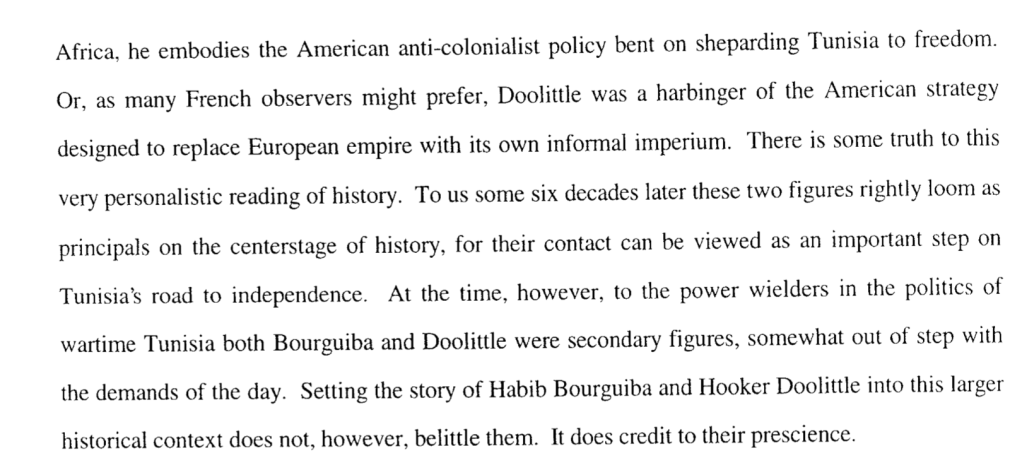
The involvement of Jay Lovestone, Irving Brown, the Reuther brothers(of United Automobile Workers) and George Meany, all Labour(AFL-CIO) representatives in the State Department, also ought to be explored. Lovestone was the former Secretary General of the Communist Party USA. After a split with Stalin owing to Rightist(Bukharinite) tendencies and a conversion to anti-Soviet form of Leftism he became involved in propping up Non-Communist Socialist Labour Unions in France, Italy and Finland straight after the conclusion of WW2. To this effect, he worked closely with the Corsican Mafia who were involved in the French Connection heroin ring to prevent the takeover of the vital port of Marseille from Soviet-aligned dockworkers. They had cause to worry, in 1947, the French national Union, CGT, backed by the Soviets had gone on strike, nearly paralysing the recovering French economy. Lovestone was the man responsible for setting up a watchdog committee to unearth evidence of Soviet repression in Hungary in 1956. But the priorities would change as the planetary diarchy crystalised. Victor Reuther and Meany, heading the ICFTU’s Fifth World Congress in Tunis announced the organisation’s support for Algerian rebels. This Reuther brother also courted Mahdi Ben Barka, an influential and charismatic independence activist and France’s #1 enemy in Morocco as per Gen.Alphonse Juin. American Labor played a major role in the negotiations that led to the return of Mohammed V and the end of the French protectorate. Ben Barka however soon started to express his radical socialist views more openly, splitting off from the monarchist Istiqlal Party and then going on to support the Algerians during the Sand War, leading to exile from Morocco. Ben Barka would move closer to the pro-Soviet Algerian bloc. The Conference was also held in Tunis because of the close connections between Habib Bourguiba, the man who would rule Tunisia until 1987 and American Labor. Bourguiba had withdrawn his Neo-Destour party from the Pro-Soviet WFTU and joined the ICFTU, courting American favour. His affiliation with them was of deep concern to French authorities, who informed the Americans that his broadcast on Voice of American was an unfriendly act22. Bourguiba had already established strong connections with the pro-independentists in America’s intelligence and foreign services active in North Africa, such as Consul-General Hooker Doolittle23.
G. Mennen Williams, Assistant Secretary of State for African Affairs under Kennedy and Johnson and former Governor of Michigan, addressed the Fourth National Union Congress on the Rights of Man, at Forest Park, Pennsylvania, on May 29, 1961. “Africans have asked if we are going to follow our revolutionary traditions or if we are going to be guided exclusively by our alliances with the colonialist countries…You who belong to the workers’ world have a particular responsibility in our foreign policy”. ICFTU met in Brussels again in 1961 and announced that the fight in Africa was all but won, and that the next field of action for the encouragement of liberation would be in Martinique and Guadalupe, French overseas departments in the Caribbean. Lovestone would write as part of his UN duties in concomitance with the declaration of the 1960 as the “Year of Africa” that, “The Federation of American Labor supports the people in their fight for independence. In this spirit, the President of AFL-CIO, Mr. George Meany, has recently announced the solidarity of the American Federation with the unions of Algeria, Morocco and Tunisia. This message has been transmitted to the American Department of State and, on receiving it, the Secretary of State, Mr. Douglas Dillon, made known the position of the American government on the Algerian question.” A declaration of the Executive Council of the AFL-CIO entitled “National Liberty and Union Liberty in Africa” and dated February 14, 1960, was circulated across Africa and lays bare American foreign policy, “there is much to be done in Kenya, in Algeria, and in Angola, where a Portuguese dictatorship continues to exploit and oppress the people…The government of South Africa persists in its shameful policy of racism.” George Meany said of “our oldest ally, France” that “I speak with equal consternation of Algeria, as Budapest where patriots deprived of liberty are now locked in the final, and I am sure, victorious struggle for independence from the clutches of French colonialism.” In 1962, Walter Reuther and the UAW funded the 1962 convention of the New Left activist org, Students for a Democratic Society(SDA) in Port Huron, Michigan, where the Port Huron Statement was penned. This was the parent organisation from which the Weather Underground emerged. The American Friends of Vietnam, which succeeded and for all intents replaced in exact function the pro-Ho Vietnam-American Friendship Association, included Josef Buttinger, an Austrian emigre who had been a dissident socialist during the Dolfuß regime in Austria and was a supposed “Indochina specialist”. Buttinger, who openly pronounced himself in favor of Ho chi Minh in his New Leader, an AFL-CIO organ, article of June 27. 1955. Ho had after all quoted the American Declaration of Independence when he proclaimed Vietnam’s independence in 1945 and the OSS were present and saluting the Viet Minh flag at this ceremony. This article effectively lays out American Labor’s war against America’s own NATO and historical European ally. But all this doesn’t come across as shocking if one keeps in mind that even John Foster Dulles blamed the the French reticence for America’s lack of success in the region after the recognition of Bao Dai’s Vietnam in his 1950 book, “War or Peace”. Then there was Harold Oram, the founder of an activist Fund called the Oram Inc. in 1939, whose clientele included the National Sharecroppers Fund for migrant farm workers in America and the NAACP. The direct link was Wesley Fishel, political science professor at Michigan State University and an AFL-CIO associate, a close friend of Diem who organised an aid program from his institution of learning to build up South Vietnam’s civil service and police force.
A fascinating figure connecting the colour line and the Cold War was a scion of a Swiss-American mercantile family and Harvard graduate, Charles Oliver Iselin III. While there, the man studied colonial history and while still an undergraduate underwent training with the nascent CIA. Iselin was brazen that both he and his branch chief were pro-nationalist on the topic of Moroccan independence, much like Roosevelt’s stance at the Casablanca Summit. From 1954 on, Iselin cultivated contacts in the FLN, regularly visited FLN/ALN camps and personally transported hospital supplies to them. French authorities in Algeria were aware of the CIA’s interest in national liberation movements across North Africa, where the agency worked through the American Federation of Labor to infiltrate trade unions in Morocco, Tunisia, and Algeria, building on its earlier support for anti-communist trade unions on the French mainland. Frantz Fanon during that time was seen as the Algerian representative to Ghana, and to Black Africa at large. Fanon in his Wretched of the Earth recognised the opportunity of American capital aligning itself with national liberation, even taking an active role to pre-emptively innoculate Liberation forces from Soviet influence. Intellectually, the Martiniquais envisioned a new modernity defined by the wretched subaltern on their own terms after the perceived cultural arrest by *colonial* peoples. It was via Iselin that the CIA arranged Fanon’s final trip to the United States, to Maryland for leukemia tretament. Fanon’s sickbed happened to also be where Iselin saw Holden Roberto for the first time. Iselin would move to Algiers as an aide to the first ambassador William Porter just as the pied noirs were packing in a hurry to leave for the Metropole and for the duration of the Sand War between Morocco and Algeria. Naturally, Iselin would be disappointed with Ben Bella’s collectivisation program, the chaos surrounding his ousting by Boumediene in 1965 and Boutelflika’s corruption, as his general regret about the manner in which events panned out across the “liberated World”. A perfect representation of the idealistic folly of the Kennedy generation to believe that national liberation would have produced anything but recrudescence of pre-colonial customs and habits.
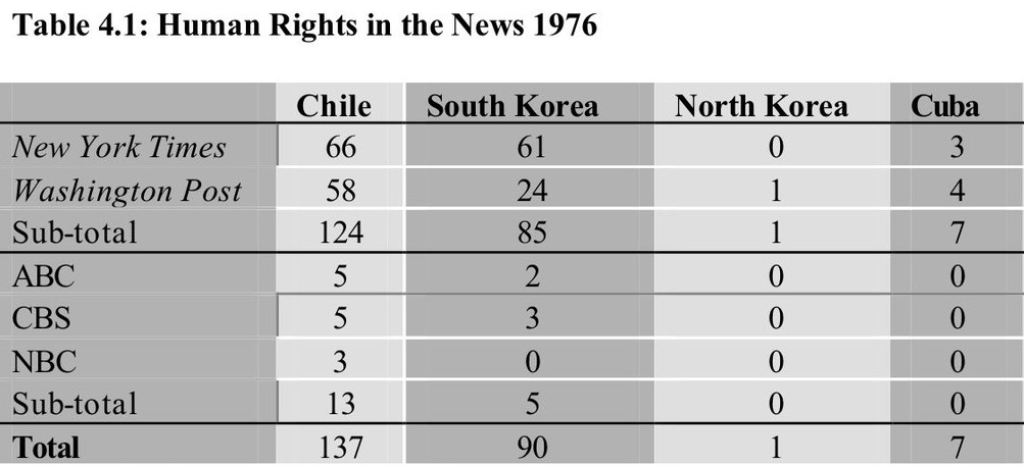
It should be made clear that American support for left-wing organisations that were amenable to American interests were also pursued within the purview of the Monroe Doctrine. As made clear by the internal 1973 CIA memorandum “Family Jewels”, the assasinations of Dominican dictator Rafael Trujillo and his godson Luis Vidal in Mexico City were done with the support of the organisation. Furthermore, there is solid evidence for the CIA using Costa Rica’s left-of-centre Caudillo Jose Figueres Ferrer as a conduit to establish a left-wing school for political activists and a journal for circulation in Santo Domingo from San Jose. All of this was through a shell fund called the Merill Kaplan Fund and the Institute of International Labour Research(headed by Norman Thomas, former presidential candidate for the Socialist Party of America), which connected figures like Ferrer, Juan Bosch(Dom. Republic’s elected president from 1963-1964) and Sacha Volman, a Jewish emigre from Romania. The internal memorandum makes it very clear that the changing of government in the Dominican Republic from a ‘dictatorship to a western-style democracy’ was a success. This was supposedly vital in forming an anti-Castro coalition in the Caribbean, by removing it’s most vocal denouncer. This poses a question to court narratives. Given, Trujillo was no angel, but in that there was an active imposition of democracy to knock off a right-wing autocracy through the use of an anti-communist Left. All for nought. The same Bosch who returned to his native Dominican Republic after American intervention to excise Trujillo would face the wrath of the Johnson Doctrine, when Marines were dispatched in Operation Power Pack to the Carribbean island out of fear of Communist involvement in the pro-Bosch insurgency led by Colonel Francisco Caamaño. A similar application of alignment theory informed American response to the curtain falling on the Estado Novo in Portugal. The Socialists promising democracy and further integration of Europe were preferable to Alvaro Cunhal’s Communists but also to any residual sentiment for the previous corporatist dictatorship. Another example of the promotion of the concept of the NCL(non-communist Left) was the denunciation of the Peruvian military junta in 1962 which had stepped in to prevent a breakdown of order after a non-conclusive election and the backing of V.R Haya de la Torre by the Americans for Democratic Action(ADA) and individuals like James Loeb, Chester Bowles and Walt Rostow. Loeb was an old horse opponent of political conservatism having been involved in the Union for Democratic Action(UDA), a precursor of the ADA which existed from 1941-47 and backed liberal candidates in the Democratic Party. And Bowles, Kennedy’s Undersecretary of State until November 1961, was notably a close friend of India’s Fabian Socialist pater patriae Nehru and supported the creation of the Non-Aligned Movement as a bulwark against Communist influence. Proof in the pudding more so when one looks at the 1976 table of references to ‘human rights violations’ or ‘erosions’ by American media establishments, including it’s two papers of record. Intense focus is reserved for the Chilean regime of Pinochet(124 mammy fines) and Park Chung-Hee in South Korea(85 mammy fines), but Castro’s Cuba is mentioned a mere seven times, a slap on the wrist really.
The fact, of course, is that in much of Europe in the 1950’s, socialists, people who called themselves “left”—the very people whom many Americans thought no better than Communists—were the only people who gave a damn about fighting Communism.- Thomas W. Braden
The face of the Civil Rights movement today, Martin Luther King Jr. could certainly read the room. During the crisis in Birmingham, Alabama, King demonstrated his awareness of the stakes when he stated “the United States is concerned about its image…For Mr. Kennedy . . . is battling for the minds and the hearts of men in Asia and Africa”. In 1966 in Chicago, when King met with inner city gangs like the Blackstone Rangers and the Vice Lords, known for their indiscriminately violent methods to facilitate their role as marshals his march through Chicago’s Gage Park, funded by the Office of Economic Opportunity, he made a rather incendiary comparison between the supposed “system of internal colonialism” and “the exploitation of the Congo by Belgium”. In a city of ethnic Catholics this would have surely raised the temperature as it was common belief that Lumumba in Congo had sparked the orgiastic violence which had led to the rape and slaughter of clergy in Leopoldville. Considering who he had chosen as bodyguards, it was unsurprising that riots followed, though the New York Times correspondent on the scene unsurprisingly did not incriminate MLK for his call to civil disobedience. To highlight, King’s SCLC(Southern Christian Leadership Conference) received federal loans from the Housing Administration for urban projects in Chicago and another loan from the Dept. of Labor for labor contracts in Atlanta. The Ford Foundation also donated $230,000 to the SCLC for leadership training, which was used for two leadership workshops in Miami, which became the subject of claims of wild sexual impropriety. Not to mention that the “Great March” from Selma to Montgomery was protected by federal troops of the National Guard by direct order from Lyndon Johnson, King was reported to have praised the use of the troops. His good friend, Gov.Nelson Rockefeller sent his cousin and the New York State Special Cabinet of Civil Rights chairman, Alexander Aldrich to the march too. The ghostwriting of King’s speeches by Stanley Levison, fundraiser for CPUSA and the financial coordinator of the Manhattan branch of the American Jewish Congress is already considered common knowledge. The March on Washington was organised primarily by Tom Kahn, a prominent social democrat, founder of the National Endowment for Democracy, speechwriter for Sen. “Scoop” Jackson and George Meany of the AFL-CIO(recurring guests on this segment) and his lover and fellow agitator, Bayard Rustin. Rustin and the NED would later become major players in the drive to dismantle Apartheid in the 1980’s among other projects to pontificate for American order overseas, concomitant with his position as a leading activist for BASIC(Black Americans to Support Israel Committee). This information ought to convey a lot about the reality of what we are supposedly told had happened. But suffice it to say that to top it off, you will never hear that racial quotas were a focal point of the SCLC’s Operation Breadbasket in hagiographies by Shelby Steele or Dinesh D’Souza. Contemporaneoulsy, in Africa, the death of Patrice Lumumba in January 1961 at the hands of Moise Tshombe’s soldiers in Katanga deepened the crisis and amplified criticism. The White governments to the south viewed Katanga as a buffer against black majority rule. Portuguese Foreign Minister Franco Nogueira explained this to the U.S. ambassador(rightly, I must add) in December 1962, noting that the imminent assault by UN forces on Katanga was eagerly anticipated by Angolan rebels working out of Leopoldville, who planned to use a “liberated” Katanga as another base of operations against Portuguese forces across the border in Angola.
The Pariahs:
“It seems clear that, when the word colonialism is used in Asian or African countries, it connotes control of an Asian or African community by a Western or European power. So understood, the Soviet Union is innocent of colonialism; Australia is a colonial power in relation to East New Guinea; Indonesia, with control of West New Guinea, is not a colonial power at all!” – Robert Menzies, Australian PM
Though this writeup can claim a wide planetary scope, I will refrain from discussing the feasibility of the actions of France, Portugal and South Africa. Whether Colonial projects were beneficial to the metropole can debated and certainly the crude Baaskaap policy of the Nationals in South Africa rendered any diplomacy inflexible. Even if economic autarky for war investment concomitant with the labour demand in other European countries and the demand for soldiers in Colonial Wars wiped away the Estado Novo’s the successful results of it’s earlier campaigns of internal colonisation and maximising agricultural output, arguably won by maneuvering the small nation’s neutrality when the Continent was at war, it should surprise anyone that the United States funded African insurgents against a European ally(a founding NATO member at that).
And it is worth questioning whether the fundamental repeal of the Portuguese Colonial Acts of 1951 and the accompanying Lusotropicalism which confirmed the colonies as integral territories in a desperate measure to retain them were worth the struggle. It should be said that Portugal could only utilise one chip in diplomacy which made the Americans pause, the Azores Islands. And loss of access to this major Atlantic supply hub forced some hesitation on the part of the Americans to fully back anti-colonial movements. There was immense pressure from the UN when Resolutions 1541 & 1542 defined it’s overseas possessions as non-self governing territories. Resolution 1654, established in 1961 the Decolonization Committee. Groups like FRELIMO and PAIGC(Cape Verdean) set up external relations departments to be represented in the UN in response to this. These groups did not hesitate to use the Committee as a platform to attract financiers as their demands increased from simple reconstruction funds to armaments proper to advance the armed struggle against Portugal. 24Salazar and his foreign ministers Marcello Matthias and Franco Noguiera were fully aware of the American subversion, the Portuguese leader making it a point to mention information on the American Committee on Africa to Francisco Franco during a meeting of the two Iberian dictators in Parador de Merida on June 20, 1960. Familiar names pop up among the members of the committee, Eleanor Roosevelt, Sen.Hubert Humphrey and Arthur Schlesinger Jr. This group had sent William Scheniman and Frank Montero to Leopoldville to establish a “Union for Angolan People”, the UPA, which became in 1962 Holden Roberto’s FNLA. William Scheinman, a jazz enthusiast and publicist worked for the Committee in building profile for the Kenyan Independence movement with Tom Mboya, the collaboration between the two resulted in the founding of the African American Students Foundation(AASF) to airlift 800 East African students to the United States. It was while working on this project that Scheinman met with Montero and established a working relationship with him which would even lead to private correspondences with Presidency hopeful John F.Kennedy, who pledged support for the airlifts and advertised it in African-American news outlets.
Salazar was right to be apprehensive of the shift heralded by Kennedy. Disaffected Estado Novo technocrats led by Julio Botelho Moniz attempted an intra-governmental coup to depose the long-reigning Portuguese leader, with American backing, though the coup was aborted, Botelho dismissed and Salazar assumed the defence portfolio himself. After the failed communist insurgency in neighboring Zaire (Congo) in the mid-1960s, both the United States and the Soviet Union (and its allies) viewed Angola as the critical battlefield of the Cold War in Africa. Mobutu’s 1965 coup strengthened his commitment to his brother-in-law Holden Roberto. Roberto would continue to be on the CIA payroll even during the Nixon interim when the administration warmed up to the White regimes in Southern Africa, only to be “turned back on” in 1975 as the ideological Civil War kicked off with the Portuguese out of the picture. The colonial war started with a brutak raid organised by the UPA from the Congo into Northern Angola which saw the slaughter of 6,000 Ovimbundu, a rival tribe of Roberto and Mobutu’s Bakongo and 1000 Portuguese settlers. The Portuguese regime for it’s part invested heavily into expensive infrastructural projects in Angola and Mocambique in a futile effort to hold on to it’s overseas territories. Under the leadership of Eduardo Mondlane, an American-educated agitant, FRELIMO organised as a Mozambican liberation movement in the British protectorate and then independent Tanganikya. Mondlane’s White American wife, Janet Rae Mondlane took part in procuring Ford Foundation funds through the New York-based African-American Institute(AAI) for the formation of the Mozambique Institute as a part-political part-educational institution for FRELIMO in Dar-es-Salaam. Such a program had already been envisioned by Mr.Mondlane on a tour in America where he corresponded with Francis X.Sutton, the Foundation’s man in charge of East African affairs. It was also the Foundation’s representative in Brazil, Reynold E.Carson, under the direction of African-American Institute president Waldemar Nielsen who would send Portuguese textbooks to the Institution for the purpose of instructing FRELIMO cadets in Portuguese in preparation for post-independence organisation of the nation. It truly was a conflict among bidders, as Mondlane received equal support from Mao’s China, who were delivering weaponry to FRELIMO through the port of Dar-es-Salaam.
The election of Richard Nixon was a respite for the Portuguese administration, the Nixon-Kissinger strategy strongly emphasising the utility of the Azores and Cape Verde islands, the administration even offering a credit loan through the US Export-Import Bank to the slowly reforming Portuguese State in 1971. The Azorean airfields would play an important role in supply reconnaiscane missions during the Yom Kippur war in 1973. A concurrent redressal of the approach in South Africa signalled by Kissinger’s National Study Security Memorandum 39(NSSM39) also directed these changes. But the damage to Portuguese interests had already been done, with successful ground offensives like Operation Gordian Knot in 1970 failing to break the well-supplied insurgents. Salazar had responded to American opposition by refusing the renew the Azores Agreement in 1962. The Portuguese instead offered Azorean naval bases to France and played into the the French and West German desire for progressive autonomy. The French defence ministry was most receptive to supplying the Portuguese forces, with a military agreement reached in April 1964 for new ships and ammunition. West Germany in turn was concerned about the involvement of the GDR in Afro-Asia, which was also the reason that Bonn had a development aid program for specialised instruments. West Germany could conduct transactions with the Portuguese government of aircraft with the neccesary defence that they were for NATO use, though the Dornier DO-27’s were particularly useful as transport planes in Africa. In May 1969, the Caetano government(succeeding Salazar) permitted the use of the Beja airfield for civil aviation training for Lufthansa. The cooperation ended with the assumption of power by Willy Brandt and his SPD. In fact, the party’s NGO foundation, the Friedrich Ebert Stiftung, joined the NGOcracy movement by actively participating in the Carnation Revolution, the Portuguese Partido Socialista was founded by the exiled Mario Soares under it’s aegis after all. The British Government had already involved itself in line with UN directives,
The MFA which carried out the Carnation Revolution put up their senior commander in the colonial wars, António de Spínola as the figurehead for the coup, in which capacity he also became the first President of the Democratic Republic, though he was by political inclination a man of the Right. Spínola sought to maintain Portuguese interests in Africa and keep at bay the radicals in his own MFA who outright supported the Marxist insurgents in Africa. His pre-emptive attempt at a putsch(Golpe de 11 de Março) involved a very contemporaneous appeal to the maioria silenciosa. His failure and subsequent exile to Brazil triggered the Veraõ Quente(Hot Summer) of 1975 giving the Communist radicals he feared power. A Nixonian tragedy indeed. Portugal became a political experiment throughout 1975 with nationalisations and collectivisations which massively triggered capital flight and reduced economic efficiency. Only another counter-coup on the 25th of November by moderate general Ramalho Eanes bookended Portugal’s arduous road to relative peace as a parliamentary democracy and began it’s process of European integration.
The Netherlands sought new arrangements to continue their presence in South East Asia after the end of the war in the Pacific. Since 1901, Dutch policy in the East Indies had been one of the”Ethical Responsibility”, announced by Queen Wilhelmina in 1901 at the behest of Abraham Kuyper and middle class liberals concerned about the colonial surplus and private interests which had entered the colony during a period of deregulation. In 1946 Governor-General Hubertus van Mook drafted a plan that would have federalised the colony into autonomous regions for the protection of different minorities, most so the Eurasians(of Dutch/European origin) and kept Indonesia in a union with the Netherlands. Indonesian nationalism was also frowned upon back home due to it’s leaders having collaborated with the Japanese and the retention of the East Indies, including by force as done during the Police Actions was broadly supported across the political spectrum. Plans had already been floated since the 1920’s to make Dutch New Guinea into a homeland for the Eurasian Indos who would stay loyal to the fatherland. When Van Mook’s proposal fell through and Indonesia attained independence, New Guinea remained under Dutch control, it’s status to be reviewed in the future. In 1957 the situation escalated when Indonesia raised the issue in the UN General Assembly, but was struck down. The Dutch countered that they were working on New Guinea’s development and possible independence. In 1961, Sukarno announced his Trikora principles for Indonesian control of Papua in a speech. The following year, the Dutch Navy crushed an Indonesian attempt to land on the island in what became known as the “Vlakke Hoek incident”. The Indonesians received Soviet military aid and Soviet personnel also advised on the infiltration raids. In what seems to be a recurring theme, Indonesian foreign minister Subandrio likened Dutch New Guinea to Katanga and it’s European-backed secession. Losing allies as the Kennedy Administration feared Indonesia’s drift to the Communists, while they themselves were mobilising the support of the Eastern Bloc and the Non-Aligned world to their side, the Dutch agreed to give over New Guinea to UN trusteeship in negotiations presided by American diplomat Ellsworth Bunker. They were repayed by Sukarno with another Konfrontasi, this time aimed at British Malaya, not undeserved perhaps as Kennedy himself met and courted Sukarno when the New Guinea Crisis was reaching it’s peak, to the detriment of the Dutch. Robert F.Kennedy visited Jakarta in January 1962 and announced publically that the United States, “as a former colony, is committed to anti-colonialism”25. The Netherlands nevertheless continued to experience post-war economic growth, in many due to not having to invest in it’s massive colony in the East. American foreign policy had dug itself into a hole as it’s crusade against nationalism and imperialism had led to it’s covert support for a virulently irridentist state with ambitions of occupying all of the Straits, justified ironically by claiming to be the successor state to the Dutch East Indies, which had united the disparate Sultanates into one collective entity. The collapse of Portuguese power and the general withdrawal from it’s widespread colonies in November 1975 allowed Indonesia to annex East Timor and perpetrate an extermination of up to 25% of it’s population in a “decolonisation program”.
In France, at the turn of the 60’s, the words “Dutch model” permeated the air that technocrats breathed. That the dynamic growth the Netherlands saw after relinquishing the East Indies could be replicated by the technocrats who surrounded the General. Algeria was high maintenance, needing the devotion of a substantial proportion of the French metropolitan GDP to maintain. De Gaulle, furiously independent and ever capricious, justified the retreat from Algeria on the grounds of the effort needed to retain the territory but also on surprisingly essentialist racial grounds. Integration could never happen, the French and the Arabs were like oil and water in his mind, just like the Anglo-Canadians and French-Canadians were. And the demographic realities of Algeria presented to him by his famous demographer Alfred Sauvy only hardened his stance. The former was something which Gaullistes of ultimately Left Republican and integrationist persuasion, “fraternizers”, like Jacques Soustelle and Georges Bidault could not accept, leading to their involvement with OAS, having once been the General’s right hand men. Even a figure with socalist tendencies such as famed novelist Albert Camus would speak of a ploy by the Soviets to encircle Europe through the promotion of a “new Arab imperialism” spearheaded by Nasser’s Egypt(a major funder of FLN), keeping up till his death a belief in a fraternal French Algeria while defending the right of his own people to remain on African soil. Vichy notable Admiral François Darlan’s popularity among the Pied Noirs during the war, who had been staunch supporters of the Uniones Latines and their idiosyncratic Pan-Latinism, Algérianité and anti-metropole sentiments in the 1920’s, may have formed the attitude of indifference De Gaulle had of them, leading to the unfortunate tragedies of the Oran and Issley massacres forcing their evacuation. Despite his strong stance on Algeria, the French helmsman himself would certainly complain about the “vocations of the Americans and Russians…to liberate the colonised people and indulge in bidding wars”. The winds of change Harold MacMillan announced of were deemed “winds of madness” by De Gaulle, who predicted the return of “tribal wars, witchcraft and anthropophagy” to Africa. His belief was that gradual independence could be granted in so far as they were in the interests of the West. The suspicion regarding the Anglo-Saxons was not without reason. The General skepticism had begun with Admiral Darlan’s deal with Eisenhower following Operation Torch which he viewed as an attempted transfer of French North Africa to the United States and was convinced that the original plan of the Normandy landings was to occupy France just as Italy and Germany were to be, that if he had not ordered Hautecloque’s armoured division to liberate Paris and proactively appoint his own prefects, France would have been lost, this time to the Americans. In the long run, this prevented the reconstruction of the French state by the American State Department as was done in West Germany and paved the road to the degree of strategic autonomy that France has thereafter possessed. There was also the matter of discussions between the US-UK and Chiang Kai-Shek at the Cairo Conference in 1943, where Roosevelt had made a brazen offer to cede all of French Indochina to Chiang. The Chinese Generalissimo diplomatically affirmed his desire for Vietnamese independence under the fraternal Vietnamese Kuomintang(VNQQ). Then there was the Syria incident just before the war ended, escalation of which could have resulted in yet another one. De Gaulle ordered the shelling of Damascus to force anti-French nationalist insurgents backed by the British to sign favourable post-independence agreements. The General was aware of the British armament of pro-independence rebels in the Levant and of OSS work in Indochina led by General Wedemeyer which he questioned Truman about. In response to a speech Churchill gave on June 1st 1945 before the House of Commons as a state of hostility loomed between Britain and France, De Gaulle called in the British ambassador to launch a tirade that they had “insulted France and betrayed the West”. It would boggle many a minds that Britain and recently liberated France were poised for war 20 days after the signing of the German instrument of surrender over Syria.
Eisenhower’s commitment to bring the boys back home and establish a third bloc in Europe capable of defending itself involved a system of nuclear weapons sharing, even giving SACEUR autonomy as per a strategy of massive retaliation, this was indeed in the days before the Soviets had achieved second strike capacity. The unsaid rationale for NATO policy and in fact counter-Soviet policy was equal containment of German interests. This was especially so in Britain, which under Macmillan sought to emphasise the special relationship and block nuclear sharing with France and any nuclear capabilities for the Bundesrepublik. Adenauer had essentially taken a covert nationalist approach since 1955 after being aggrieved by what he saw as concessions at the Geneva Summit. In 1967, Adenauer would refer to the Nuclear Nonproliferation Treaty aimed at restricting access for West Germany as “the Morgenthau Plan squared”. The Berlin Crisis was in reality triggered by the Soviets in response to the possibility of West Germany attaining nuclear weapons, but more dangerously, autonomy to use them to retake the East. Under Kennedy, a doctrinal pivot was made towards suppressing national nuclear arsenals and subordinating all of them to American authority under the umbrella of NATO, in line with the general shift to a policy of flexible response over massive retaliation. De Gaulle was livid at the Americans after the cancellation of the tripartite governing council plan for NATO in 1959 and pursued an independent route for acquiring nuclear weapons, now covertly supported by Adenauer who hoped this would prepare opinion for West Germany’s own armament. Even when Kennedy and McNamara reneged on their opposition to land-based MRBMs, Under-Secretary of State George Ball undermind them by presenting an underwhelming plan of mixed-man multilateral forces to De Gaulle, who now even more incensed went ahead to sign the Elyseé Pact with West Germany. It was Kennedy’s turn to act and he noted in January 1963 that, “there was nothing much we could do about France, but we can exert considerable pressure on the Germans”. He was open about his opposition, declaring that unless this was voiced, “we would not be able to make clear to the Germans that they faced a choice between working with France or working with us”. A rift opened in the CDU/CSU, with two factions forming, the Gaullisten led by the man and comprised of Franz Josef Straß and KT Freiherr von und zu Guttenberg against the Atlanticists led by Ludwig Erhard. The Americans intervened to urge Atlanticists to oppose the treaty with France and also mobilised the now anti-neutralist and pro-West SPD to oppose Adenauer. He would be removed from office and would be succeeded by Erhad26.
In 1961, the Putschist Army Generals for their part(Salan, Challe, Massu,Jouhaud) were responding to betrayal, to the Army’s prestige. De Gaulle was proclaimed as a saviour in 1958 as he had been in 1940. With the mandate to rule by ordinance for six months. It was the failure of the promise of the first putsch to hold Algeria that was the premise for the second and there was once more a call for national salvation. But despite absorbing Mao’s doctrine, originally for purposes of counter-insurgency, the circumstances meant that the OAS never really could appeal to any authority save sovereign legality and neither was there a supranational direction from a regular outside power as general interest was pervaded by a consensus of anticolonialism. Dien Bien Phu and the disaster of 1940 fuelled the insecurity of the armed forces, and the relief of Algiers had restored the élan, but moreso some prestige, the retention of Algeria, however bloody, would confirm the sorely desired respect for the French forces. The former also accentuated distrust of American support, as the planned Operation Vulture for relief of DBP never took place, in reality because of Eisenhower’s hesitation and British refusal. After the rejection of the CFA monetary union by Guinea led by Sekou Toure, de Gaulle ordered all French technical staff and civil servants to be pulled out and all colonial buildings and infrastructure to be torn down, even down to their toilet seats. French investment was deemed to be a gift, and those who stayed friendly like Félix Houphouët-Boigny of Cote’d’Ivoire were returned the favour as Yamassoukro became a magnet for French investors and technicians from the other former colonies. De Gaulle’s vision of Françafrique was built by Jacques Foccart(head of de Gaulle’s private enforcement militia-the Service d’Action Civique) as a change in direction to the civilising mission concept of French involvement. This was a return to self-interest. France was one of the few states which recognised the Belgian-backed state of Katanga of Moise Tshombe, the interest in minerals resulting in an “unofficial official” delegation of mercenaries sent, led by Roger Faulques, under whom served a young but experienced ex-marine, Robert Denard. France, along with Portugal, South Africa and Israel also provided arms to the Igbo Biafran secessionists in Nigeria. A man seemingly at ease with his contradictory statements, de Gaulle could sell military equipment to South Africa(Pretoria’s most important supplier from ’64-’75) as part of the Rugina Project to develop South African military infrastructure and yet would often invoke the language of decolonisation when it suited him to do so, particularly when it came to the matter of Quebec. The CIA retaliated equally with their networking with the OAS and their involvement in stoking the student riots of May ’68 after the French withdrawal from NATO’s military command structure in 1967 and the denunciation of the Vietnam War by De Gaulle.
Though the Sharpeville incident proved to be the event that resulted in diplomatic pressure mount against the South African government with UN Resolution 134(though a formal UNESCO fatwa had already been declared in 1956), it was really Resolution 181 three years afterwards which pressed for an arms embargo. De Gaulle did not care much for the UN, thinking of it as a tool of the United States, while South Africa had two resources he wanted the most to build French power, gold and free use uranium. That and South Africa’s walkout of the Commonwealth while Rambouillet talks with the UK to join the Common Market were ongoing, it was too good of a snatch for France to miss. Even personally, in a meeting with Foreign Affairs Minister and Apartheid hardliner Eric Louw in 1961, the old General affirmed that he would not oppose the country’s segregation policy, as the White minority were the “creators of South Africa”. This was not all to different to De Gaulle’s promise to Marcello Matthias of Portugal in October 1960 to help them retain their colonial possessions. If there was any similarity between the fundamentals of Dirigisme and Volkskapitalisme it was; belief that increase in a price of gold was the solution to the shortage in liquidity, for security and autarchy respectively, against the power of the dollar. Higher gold price would leave South Africa, possessing the largest reserves in the world with a strong and favourable trade balance which would render it seemingly inviolable from foreign economic warfare. French willingness to assist Pretoria militarily was a policy aiming at increasing the French gold reserves as an alternative solution to France’s dependence on the US dollar, which De Gaulle followed up by buying large quantities of gold on the London market and stockpiling to the point that by 1966 France had possession of 1/8 of the world’s monetary gold. He earned the derogatory nickname, “Gaullefinger” in the American press for this. Even after Giscard D’Estaing’s move to condemn South Africa and reduce military sales, as of 1977, Pretoria came first among France’s suppliers of minerals(eg. ferrochrome, vermiculite and manganese). On 26 May 1977, South Africa’s Electric Supply Commission (ESCOM) awarded a US $ 1 billion contract to the French consortium of Framatome-SPIE-Batignolles-Alsthom for the construction of South Africa’s first pressurised water reactor nuclear power plant at Koeberg, about 25 miles north of Cape Town. Koeberg remains the only working nuclear power station on the African continent today.
Daniel Cohn-Bendit could quite openly state how the revolt he sparked was inspired by the vapid notion of “Woodstock Nation”. Cause célèbre and enfant terrible all the same, what ignited the revolt was the German Jewish student’s histrionic puerile demand that the University of Nanterre’s girl dormitory be accessible to the male students. Michael Seidman has argued about the “imaginary” legacy of the soixante-huitards owing to the post-facto commemoration. The archival work done by French journalist Vincent Jauvert lays bare the international response to the situation in France, with a classified memorandum critical of De Gaulle from Director of CIA Richard Helms suggesting to President Johnson that the events might allow for the return of the more amenable Socialist leader Pierre Mendes France. This memorandum was cited by Cohn-Bendit himself in an interview with Hervé Bourges, this interview also notably includes a confession that CIA intermediaries had offered his agitants sums of money. However the Gaullist camp was naïve and believed misleading intelligence that the it was the Communists and Moscow who had provided wood for the fire. It is clear that Valerian Zorinne, Soviet ambassador to France and the Committee of the French Communist Party(PCF) believed that the “students were in the grip of the Trotskyists”. Both the PCF and the CGT did not protest the decision of the government to expel/deport the “foreigner” Cohn-Bendit on May 22. Jacques Massu, hero of Algiers, who was once more in the good graces of De Gaulle and hosted him on the 29th of May in Baden-Baden had been visited by a Soviet Marshal the day before, who had advised him that the rioters ought to be crushed, brutally. Indeed in 1968 itself, a US State Department memorandum drafted by Dep. Undersecretary of State Charles Bohlen was leaked by the Conservative publication Human Events which made it clear that youth agitators like Rudi Detschke, Jean Dube(leader of the French Trotskyite Revolutionary Youth Committee) and Cohn-Bendit ought to be permitted entry for “general encouragement of our government for informal contacts between US and foreign youth leaders”. Sure enough, Dany Le Rouge would eventually be reborn as the leader of the European Greens as Dany Le Vert, opponent of Orban and vociferous war hawk for humanitarian interventions.
The USIA, through, the National Endowment for Democracy was deeply involved in setting up a public library in Soweto to “conscientise”(note adoption of Freirean pedagogical term) Black youth. Secretary of State James A. Baker III on his visit to South Africa in 1990 would meet anti-Apartheid leaders in that very same library prior to his meeting with ANC oldtimer Walter Sisulu. Based on the internal Wiehan report and Riekert Commission in South Africa, it was the worker’s strikes emanating from Soweto and Kwa-Zulu Natal and unions rallied by the Black Consciousness Movement, at a time when the ANC had receded to ignominy which broke the illusion of the feasibility of the Baasskaap system of reliance on migrant and Black workers. Thereafter South Africa or the Broederbond specifically, alone after Portugal’s retreat from Africa after it’s Carnation Revolution and also facing insurgency in Namibia(Border War) would experiment with giving nominal independence to Bantustans and also with tricameralism, all the while slowly abdicating their police state powers. The isolation had begun even prior to the Sharpeville condemnations. On 30 October 1958 the Eisenhower administration signaled a change in its thinking about Africa by voting, for the first time, in favor of a UN resolution condemning South Africa’s apartheid policies. Henry Cabot Lodge Jr. had lobbied for a year in favor of this new position, notably arguing that the Brown decision and the Little Rock crisis had made it “even more important that we express ourselves positively on racial issues.” Is it any surprise that this Ambassador to the United Nations, deeply insinuated with the Eastern Establisment, had been involved in scuttling Taft’s ’52 nomination? When South Africa’s aforementioned foreign minister Eric Louw complained to the American ambassador to his country, Henry Byroade, that the change in the American position had come about because of domestic pressure, Byroade conceded the point in private conversation. Then, India in 1961 put forward a motion in the UN over the status of the Indian population in South Africa concentrated in Natal, who were not allowed to enter the Orange Free State without a permit. South Africa retorted by saying that it’s policy was a domestic affair and as expected Australia, Belgium and Portugal voted in support. France abstained. But by 1975 as pressure on Pretoria and Salisbury mounted as allies and wellwishers dried up, John Vorster was even pressing Rhodesia for a settlement with the majority, gradually limiting munition and fuel supplies to Ian Smith’s nation, all to win some recognition for South Africa to extend life support. Though it should be said that following his meeting with Vice-President Walter Mondale in Vienna, Vorster, who had positioned himself as being able to pawn Smith in exchange for guarantees of stability, recognised that American policy hereafter made no distinction for solution between Rhodesia and Namibia and the South African state itself. It ought to be noted that both White Minority governments had to contend with massive demographic explosions of the Black populations in their countries. In many ways, Rhodesia resembled the United States. A new nation which broke from her motherland and thought herself more “British than the British themselves”. An attempt had been made previously by Roy Welensky to keep North and South Rhodesia in a federation to prevent Black Majority rule, which he positioned as resisting directives from London itself. Rhodesia entered an alliance with unlikely allies after all, Afrikaaner-run South Africa and the Latin Catholic Portuguese. ALCORA was an multilateral alliance between the three minority governments in force from 1970. The Portuguese and South African governments shielded the Rhodesians from the oil embargo inflicted on them by Britain with UN backing in the 1960’s, the Royal Navy dedicating a task force called Beira Patrol for a decade, costing up to a 100 million pounds to maintain. The Portuguese took to supplying the beleaguered nation overland. There was also the sanction evasion carried out from the Comoros, where Robert Denard set himself up as the de facto warlord, having just previously fought among French volunteers(VII Independent Company) in Rhodesia. It is true that the CIA did exchange information with the Verwoerd government in it’s clamping down of pro-Soviet elements like the ANC and there was some networking in Angola with the SADF intervention in support of UNITA and FNLA after the Portuguese departure, but this itself proved to be a fiasco. Henry Kissinger’s condemnation of South African intervention in Angola came as a surprise to Pretoria, who claimed that they launched action owing to information given by Washington. Kissinger’s tour of Africa in 1976 culminated with a statement in Lusaka in April 1976 which was received with surprise by many of his detractors. Affirming support for majority rule in Rhodesia, the statement also included the all important reminder that “racial justice” was “a dominant issue of our age”. The concern, naturally, was that a pro-Soviet government would inevitably come to power in Salisbury.
In reality, the United States and the Soviet Union collaborated in a sustained and multi-faceted fashion to prevent South Africa from undertaking a nuclear test in the Kalahari Desert in 1977, in the “spirit of Glassboro”. Around this time, on 27 October 1977, US President Jimmy Carter gave his approval for renewed energetic military sanctions against South Africa as a result of Pretoria’s decision to ban press freedom in South Africa for black newspapers. This came about on the new president’s own initiative via a multi-agency review of policy(NSC-4 memorandum). It was also Carter who backed Mugabe to take over Rhodesia. Carter after all appointed former SCLC leader and MLK confidant Andy Young as American Ambassador to the UN. Young would later explicitly defend Mugabe’s violent land reforms and Gukurahundi(Mugabe’s sanctioned ethnocide of rival Ndebele tribe), deeming the insurgent struggle an “enlightened” one. Furthermore, the usual suspect, the Ford Foundation in fact did facilitate the meeting between Broederbond leader Pieter De Lange and Thabo Mbeki in New York in 1985 to begin the power-sharing(or better put, handover) process. As soon as the NGOcrats got a whiff of the transitional talks underway, new players emerged on the scene too. Alexander Soros has admitted to the important role that bursaries and donations from his father which culminated in the Dakar Conference of 1987 in conjunction with the National Endowment for Democracy played in the creation of the Open Society Foundation. The West’s inordinate interest in presenting the new rainbow nation as an ideological victory was clear in the personal interest that John Major and Bill Clinton took as midwives in ensuring the transition to power continued smoothly as Zulu(Inkatha Party) and Afrikaaner seperatism, besides the eruption of spontaneous violence(remember Amy Biehl?) threatened this breech birth. Much as the work of the Foundations during the heyday of the Civil Rights movement was to identify and fund moderate voices and pit them against radicals and so there existed effectively two wings of the ANC during the power transfer, the Umkhonto we Sizwe mob including Jacob Zuma and Joe Nhlanhla with their KGB-model and the more civic minded American cultivated union wing. But for the sake of the peaceful transition, the view behind the proscenium arch of the ANC prisoner camp in Angola(Quadro) and indeed of the revolt of 90% of it’s cadres in 1984 were airbrushed, as were the involvement of Winnie Mandela and Oliver Tambo in the repression. The obvious ideological totem that this country with collapsing infrastructure and insane BEE laws serves puts to bed the notion that “International Reactionary Capital” acts out of pure economic self-interest. If anything, the pro-China position of the ANC should have caused panic among “Capital” to secure a country with vast gold and platinum reserves and whose international waters include a major shipping route. No such action has been taken. And none likely will be. It completely befuddles those who establish their geopolitical analysis purely on economic considerations. It is silly to think that corporate executives are willing to tank shareholder value in an autocastrative act. There is no Woke Capital. Woke regulates Capital.
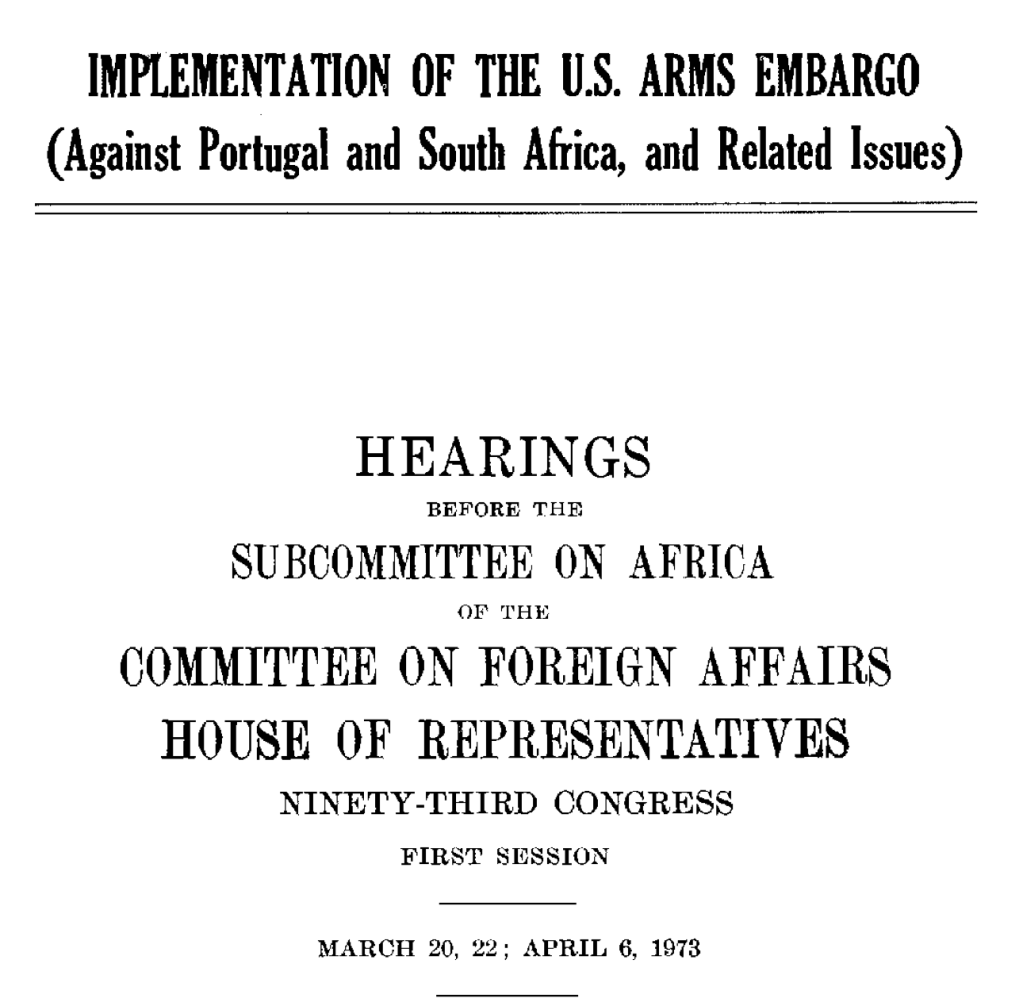
In conclusion, as a good acquintance of mine summarised, “Negrolatry became sort of a shibboleth for right-thinking political crowds and set up the modern social justice attitude, initially as a means for creating a defence against Soviet criticisms of American racism.” It’s domestic repurcussions, including concessions to the symbology of civil rights or the insertions of disparate impact clauses in Civil Rights legislations have metastastised from the Cold War governmental apparatus. Austrian Conservative sociologist Helmuth Schoeck wrote of the predominant Afrophilia to famed colleague Wilhelm Röpke as a “strange inversion in the subconscious of many of our colleagues” which he claimed would accelerate the “literal extinction of the White population”. When the question of space-appropriation widened to a planetary dimension, biologisation of the political was inevitable as appropriation is tied in mass democratic systems to mass production, mass consumption and mass distribution, consumption for all quickly devolved into consumption for the marginalised, as Human Rights exist with Minority Rights, the dictatorship of relativity exists to congeal homogeneity of social structure. It was precisely America’s ascendency to the status of a global superpower that precipitated the decline and liberalization of the American body politic; the enforcement of the Civil Rights agenda was conducted precisely in order to promote the image of the US as a racially progressive state in the competition with the USSR for the hearts and minds of the denizens of the Global South. Marxist-Leninism had it’s day of reckoning with it’s fall and the multiple failures of application to fulfill it’s material promises, but universal Human Rights have not. And the former’s Scientific Communism claimed methodical rigour, the western analogue is merely glorified looting. The ethicisation demanded by the West itself relies on the idea that if poorer nations were in a better economic position, that this would automatically reflect their socio-political life(Pride parades, McDonalds etc. the whole shebang). What is not accounted for is that if historical factors limit less developed nations, then the natural disposition will be to claim the West’s own failure to abide by it’s imported ethical universalism holds these nations back, which has become a double-edged sword.
- Read Carlsbad1819’s short piece on the Paris Peace Conference. James Byrne’s report at: https://archive.org/details/reportonparispea00byrn/page/4/mode/2up ↩︎
- https://content.time.com/time/subscriber/article/0,33009,801396,00.html ↩︎
- Senator John F. Kennedy: Anti-Imperialism and Utopian Deficit, A.Stephanson, Journal of American Studies , Volume 48 , Issue 1 , February 2014 , pp. 1 – 24 ↩︎
- https://www.archives.gov/milestone-documents/executive-order-9981 ↩︎
- https://www.trumanlibrary.gov/library/federal-record/records-presidents-committee-civil-rights-record-group-220 ↩︎
- “Schlafly, Phyllis. A Choice, Not an Echo: The Inside Story of how American Presidents are Chosen. Alton, IL: Pere Marquette Press, 1964.” ↩︎
- “NAACP Greeting to CIO Hits Taft-Hartley Law,” October 16, 1947, NAACP mf Part 13a r4. ↩︎
- Eugene Cheeks to Roy Wilkins, February 25, 1950, NAACP II-A-246 ↩︎
- Renee Romano, No Diplomatic Immunity: African Diplomats, the State Department, and Civil Rights, 1961-1964, The Journal of American History, Vol. 87, No. 2 (Sep., 2000), pp. 546-579 ↩︎
- Merriam, J. (2023, July 12). How we got our antiracist constitution: Canonizing brown v. Board of Education in courts and Minds. The American Way of Life. https://dc.claremont.org/how-we-got-our-antiracist-constitution-canonizing-brown-v-board-of-education-in-courts-and-minds/ ↩︎
- https://www.reuters.com/article/opinion/brown-v-board-of-ed-key-cold-war-weapon-idUS4080430846/ ↩︎
- https://www.cato.org/commentary/original-sin-robert-bork ↩︎
- “ Gaither Jr. Report of the Study for the Ford Foundation, 63.”
↩︎ - Frances Conor Saunders, Cultural Cold War
↩︎ - City Journal. (2023, November 30). The billions of dollars that made things worse | City Journal. https://www.city-journal.org/article/the-billions-of-dollars-that-made-things-worse ↩︎
- “Grosser, Charles F. Helping Youth: A Study of Six Community Organization Programs. Washington, DC: Office of Juvenile Delinquency and Youth Development, 1968”
. ↩︎ - “Price, David H. Cold War Anthropology: The CIA, the Pentagon, and the Growth of Dual Use Anthropology. Durham, NC: Duke University Press, 2016.”. ↩︎
- Father of Jamie Raskin(Rep-D for Maryland’s 8th District) ↩︎
- HOVSEPIAN, NUBAR; Schaar, Stuart (2016). “Review of Eqbal Ahmad: Critical Outsider in a Turbulent Age, SchaarStuart”. Journal of Palestine Studies. 46 (1 (181)): 77–79 ↩︎
- “Tax-Exempt Foundations, Report of the Special Committee to Investigate Tax-Exempt Foundations and Comparable Organizations House of Representatives, 83rd Con. 110–114 (1954) (The Fund for the Republic).” ↩︎
- “New Left School of Los Angeles.” Fire and Police Research Association of Los Angeles News, October 1965.” ↩︎
- https://history.state.gov/historicaldocuments/frus1951v05/d774 ↩︎
- https://www.files.ethz.ch/isn/46329/doc508.pdf ↩︎
- Almada, Aurora(2012), The Role of the Decolonization Committee of
the United Nations Organization in the
Struggle Against Portuguese Colonialism in
Africa: 1961-1974, Journal of Pan-African Studies vol.4, no.10, pg 253 ↩︎ - Kivimäki, Timo (2003). US–Indonesian Hegemonic Bargaining: Strength of Weakness. ↩︎
- My thanks to Rin Tohsaka Groyper for having me read Marc Trachtenburg’s A Constructed Peace. This paragraph is but a short summary of the book. ↩︎

 The Mystagogue's Blog
Leave a comment